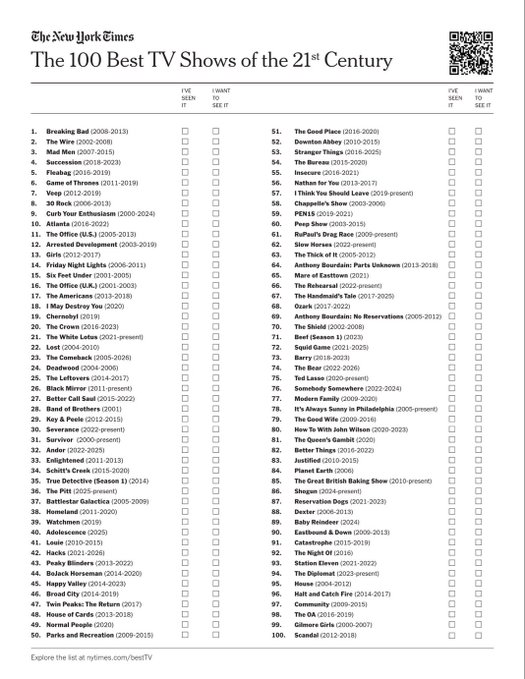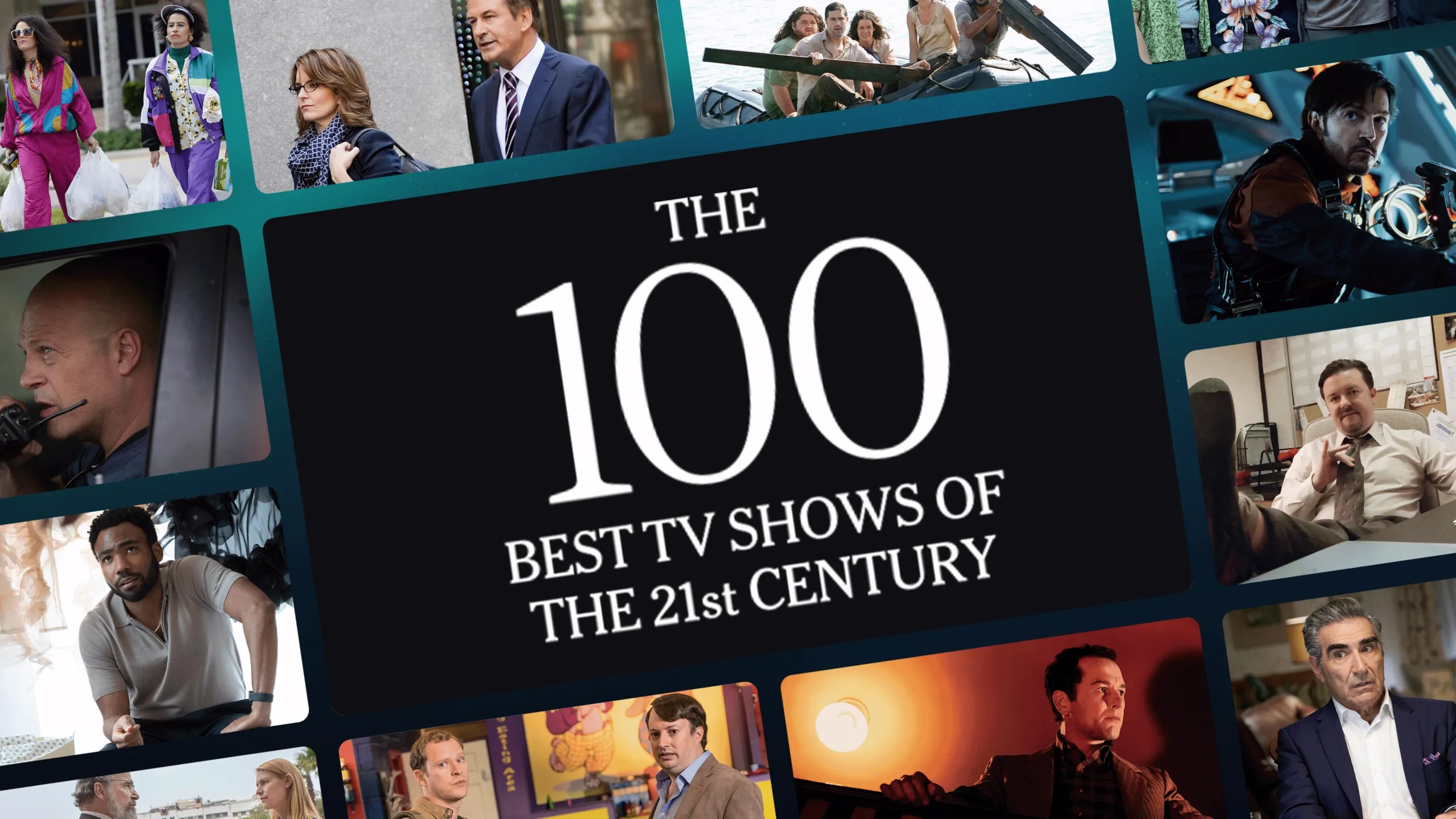
The New York Times has revealed its list of the 100 Best TV Shows of the 21st Century, but the story behind the list is just as interesting as the shows that made it.
The Times did not create the list from its own writers alone. It asked 516 people from the television industry to take part, including actors, writers, producers, showrunners, executives and other TV professionals. Each voter was asked to choose up to 10 shows they believed were the best of the 21st century. Names involved in the voting included Bryan Cranston, Elisabeth Moss, Colman Domingo, Jason Bateman and other well-known people from television.
The voting had another unusual step. After choosing their shows, voters could take part in head-to-head matchups, where they picked which of two randomly selected shows they preferred. The New York Times then combined those matchup results with the regular votes to create the final list. The newspaper worked with The Upshot, its data and analysis department, on the project.
There was also one major rule that affected which shows could compete. A series had to premiere on or after January 1, 2000 and have more than one episode. That meant some famous shows were never eligible. One of the biggest examples is The Sopranos, which first aired in 1999. Although most of its run took place in the 21st century, it did not meet the Times' starting-date rule.
The list also opened the door to many different types of television. The Times allowed dramas, comedies, reality shows, documentaries, talk shows, game shows and even YouTube series. This means the project was not limited to traditional scripted television. Survivor, for example, was eligible because reality and competition shows were included in the rules.
That approach has helped make the list a talking point among television fans. Some viewers have questioned why certain popular shows were missing, while others have focused on the high positions given to shows from different genres and different periods. The debate shows how difficult it is to create one list that represents more than two decades of television.
The New York Times is also giving readers a chance to take part. Alongside the industry poll, the newspaper created a reader voting option, allowing audiences to make their own choices. The main list, however, represents the votes and data collected from the 516 people selected for the project.
Rather than being a simple list of popular shows, the project is also a look at how television changed during the 21st century. The rise of streaming, the growth of different types of series and the arrival of major film actors on television have all changed what audiences watch and how shows are made.