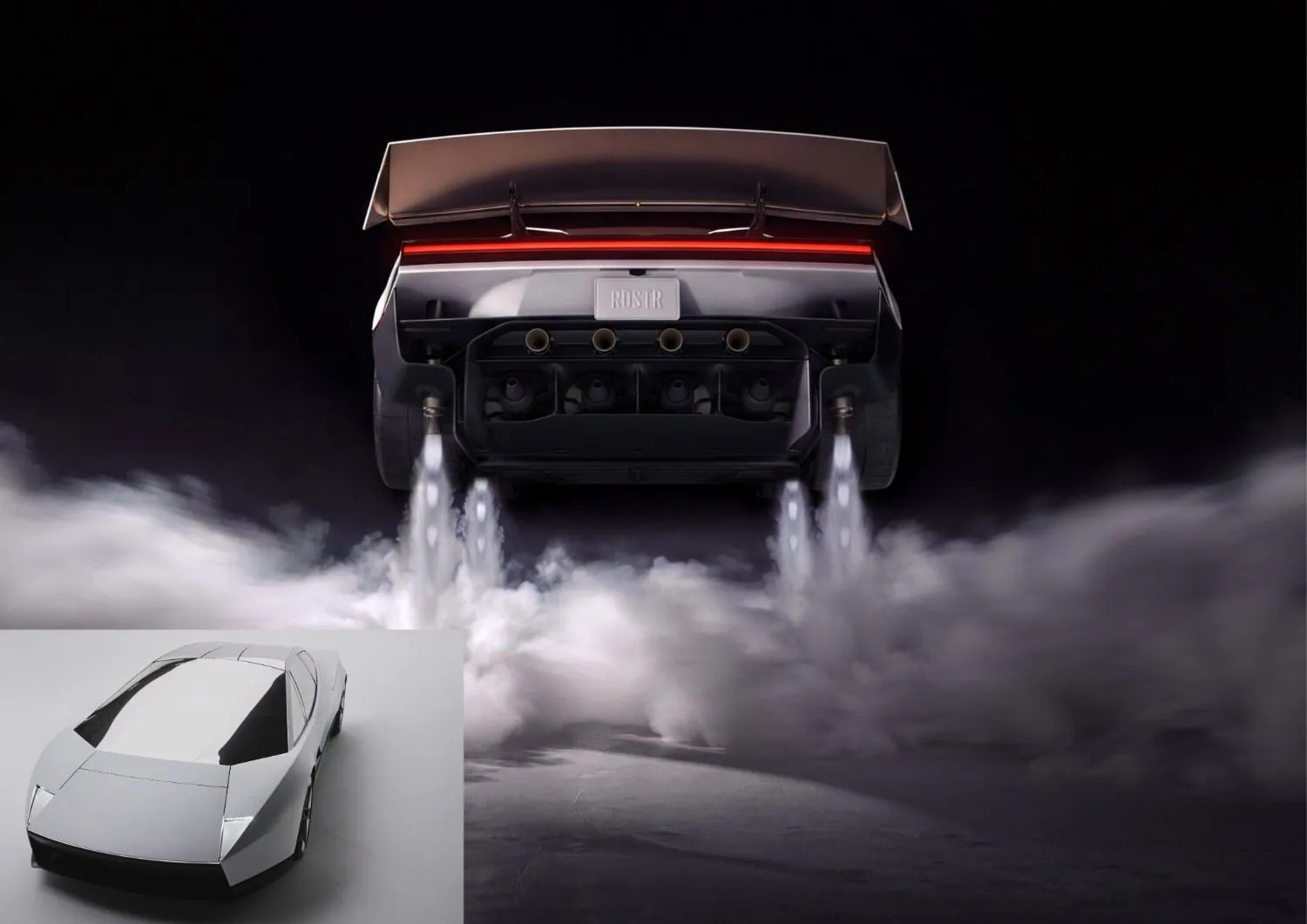
Tesla has unveiled its redesigned next-generation Roadster after years of delays, showcasing an electric sports car prototype that used SpaceX-developed thrusters to perform dramatic airborne manoeuvres during a demonstration in Texas on October 15, 2026.
The event took place at a SpaceX testing facility in McGregor, where the vehicle was shown climbing a curved ramp, travelling upside down and launching into the air before turning and landing. Tesla also demonstrated the car leaping over a line of parked vehicles. The prototype was operated without a person inside during the stunt.
The demonstration combined two technologies: an underbody suction system that Tesla says helps the car grip the ramp, and compressed-gas thrusters developed with SpaceX. The thrusters are designed to provide additional force for the car’s unusual movements. The display was a major feature of the long-awaited second-generation Roadster, first introduced as a concept in 2017.
Tesla CEO Elon Musk also highlighted the car’s acceleration. During the demonstration, the company showed a run from zero to 60 miles per hour in a claimed 0.81 seconds. Tesla also claims a top speed above 230 mph, although these performance figures remain company claims rather than independently verified production-car results.
Despite the flying-car comparisons, the Roadster is not yet an everyday flying vehicle. The demonstration showed brief airborne manoeuvres under controlled conditions, and questions remain about the use and legality of these features on public roads. The specialised Rocket version is not approved for public-road use, according to reporting by The Information.
Tesla says production is planned to begin in 2028. However, the company has not yet delivered the next-generation Roadster originally announced in 2017, making the latest timeline an important milestone rather than a guarantee of customer deliveries.
The unveiling places the Roadster back in the spotlight as Tesla continues to pursue high-performance electric vehicles alongside its work in automation and artificial intelligence. For now, the demonstration offers a look at the company’s ambitions, while the final production vehicle, its capabilities and its delivery schedule remain to be seen.