
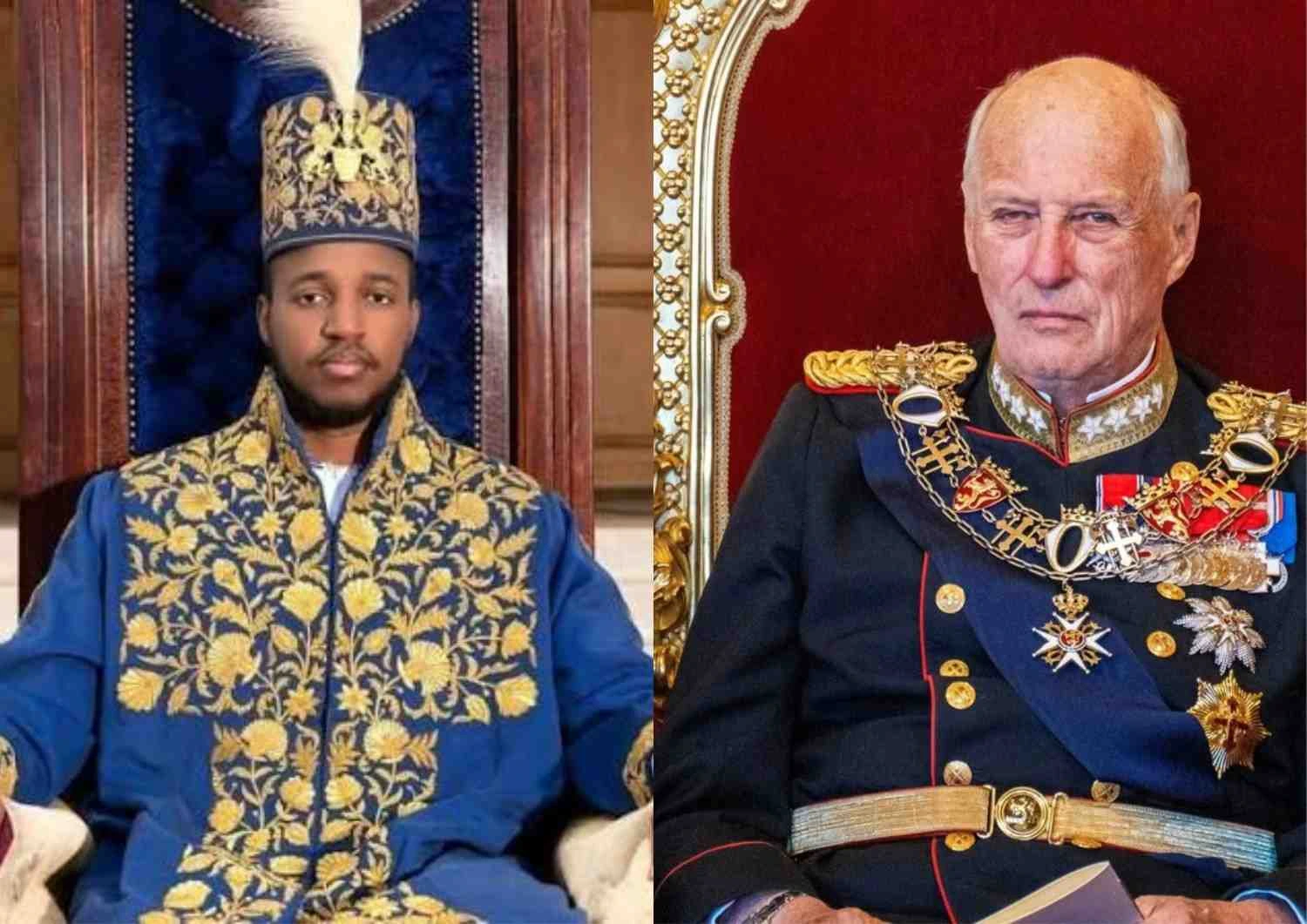
The deaths of two monarchs from very different generations have marked an extraordinary moment for the world of royalty.
King Oyo Nyimba Kabamba Iguru Rukidi IV of Uganda’s Tooro Kingdom died at the age of 34 on Thursday, August 27, while Norway’s King Harald V died at 89 on Friday, August 28. Their deaths came only hours apart, bringing an unexpected end to two very different royal journeys.
King Oyo became internationally known after ascending to the Tooro throne in 1995 at just three years old, following the death of his father. He was recognized as the world’s youngest reigning monarch and remained a symbol of the Tooro Kingdom for nearly three decades.
Although Uganda is governed as a republic and the Tooro monarchy has no constitutional political power, the kingdom remains an important cultural institution. During his reign, Oyo became associated with youth empowerment, education, health and community development, while also maintaining a strong connection with football and young people.
The Tooro Kingdom confirmed that Oyo died at approximately 10 p.m. on August 27. Officials said he leaves behind a prince who will be formally identified as his successor according to the traditions of the kingdom.
Thousands of kilometres away, Norway entered a new royal era with the death of King Harald V at the age of 89. Harald, who had been on the throne since 1991, was Europe’s oldest reigning monarch and was widely known for making the Norwegian monarchy more modern, accessible and closely connected to the public.
Harald’s reign lasted more than 35 years and included major moments in Norway’s modern history. He became particularly respected for his public speeches and compassionate response to national tragedies, while his approach helped strengthen the monarchy’s relationship with the Norwegian people.
Following his death, the Norwegian throne immediately passed to his son, who has taken the regnal name King Haakon VIII.
The passing of King Oyo and King Harald, separated by only a few hours but representing vastly different generations and royal traditions, has created a striking moment in modern history. One became a king as a three-year-old and grew into his role in the public eye; the other spent more than three decades guiding a modern European monarchy.
Their stories were very different, but both leaves behind institutions now preparing for a new chapter.


