Bruce Melodie has taken “Irya4” beyond a music release, using its official video to tell a story inspired by one of the Bible’s most recognizable figures Moses.
The video moves through different stages of the story of Moses. During his media tour to promote “Irya4,” Bruce Melodie explained on Kiss FM that he takes on the role of Moses in the video, while also portraying Pharaoh. The two roles appear through different scenes and outfits, including an Egyptian royal-inspired look that reflects the setting of Moses’ early life in Pharaoh’s household.
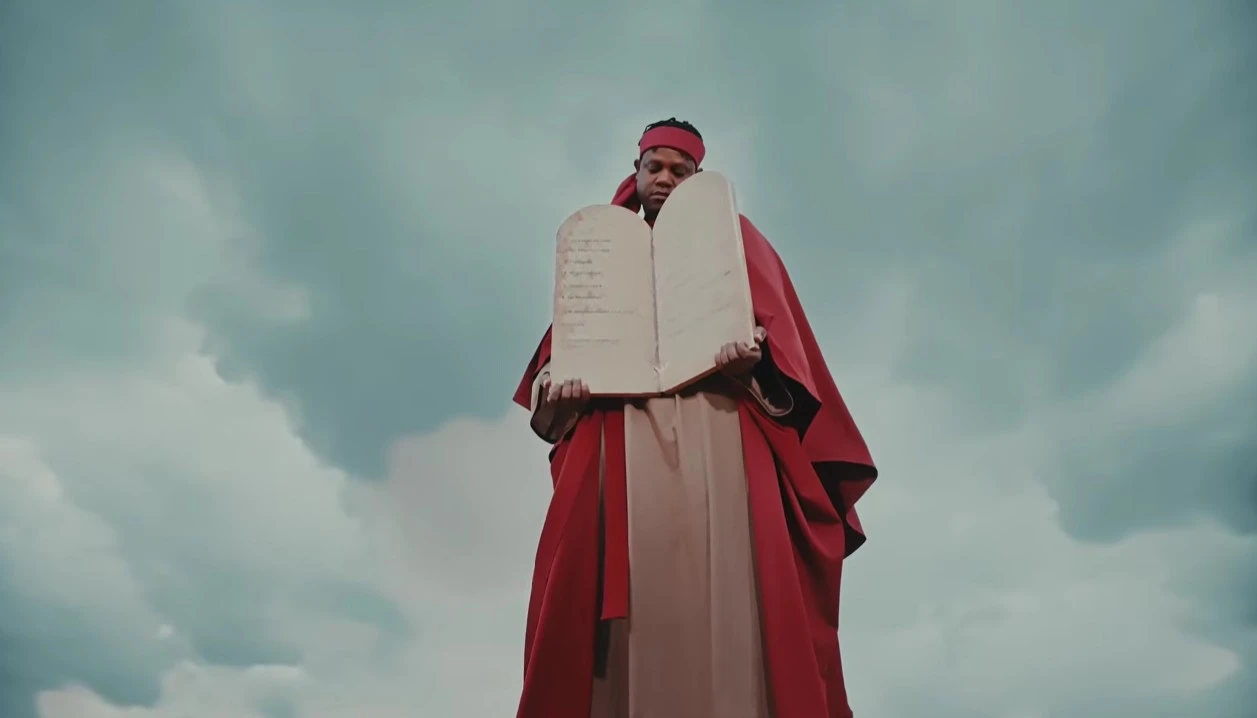
The visual story then connects with another major moment from Moses’ life. After leaving Egypt with the Israelites, Moses went up Mount Sinai, where he received the commandments before bringing them back to the people. The imagery gives a clear connection to the 10 rules at the center of “Irya4.”
Rather than simply showing Bruce Melodie performing the song, the video uses the Moses-inspired storyline to give the rules a visual setting, moving from his Egyptian background toward the mountain and the presentation of the rules.
The video was directed by Fayzo Pro, with Dawest serving as the director of photography. Jalis_Visuals handled editing and visual effects, while Director c worked on the color grading.
The production team also included Sam as the gaffer and Asifat on makeup. Njuga handled location organization, while dancer and choreographer Koffi Wallet worked on the choreography. Behind the scenes, Prince Vvasco and Watallah_Gvng captured BTS content, documenting part of the creative work behind the production. The audio for “Irya4” was produced by Loader, with Bob Pro handling mixing and mastering.
The biblical inspiration adds another layer to a song built around 10 rules, with Rule Four giving “Irya4” its name. The video turns that concept into a visual story, allowing Bruce Melodie to connect the song's rules with a familiar biblical journey from Egypt to the mountain. The story does not end with the music video itself. Behind the 10 rules is the bigger question of what each rule means — and why Bruce Melodie chose the fourth one to give the song its name.